1.5 MW Natural Gas Generator Set — AP-1500NG
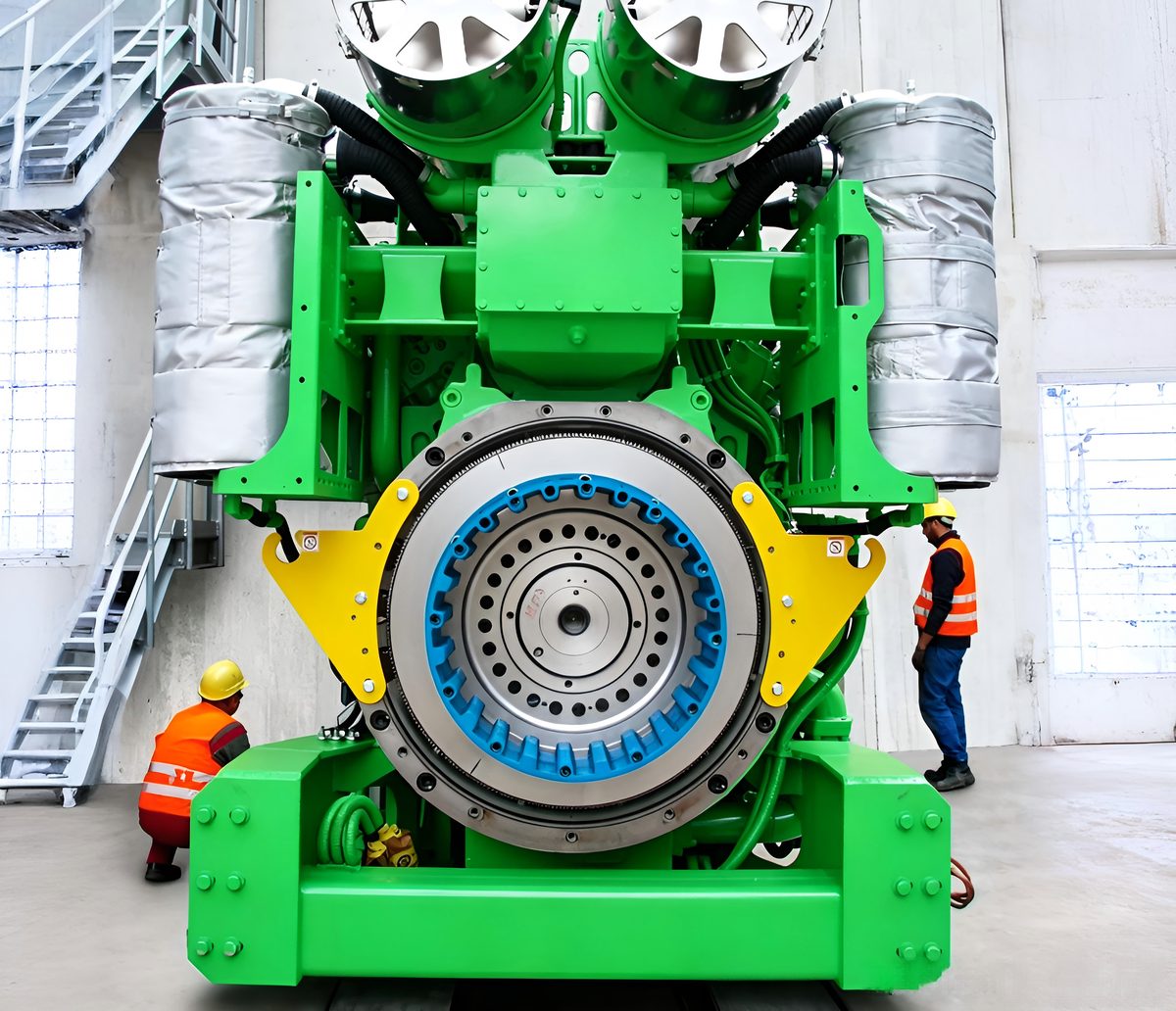
A large-bore block engine for utility-scale gas-to-power work: a 1.5 MW unit designed to run on pipeline natural gas at continuous high load, either as a single plant or as one module in a multi-megawatt paralleling station.
Overview
The AP-1500NG is the node where gas-to-power stops being a backup decision and becomes a generation project. At 1.5 MW the economics shift: heat rate and part-load efficiency decide whether the project works, and continuous-duty engine selection matters far more than it does at 200 kW.
Output is 6.3 kV or 10.5 kV, which places the unit at medium-voltage level for direct connection to a plant switchboard or a step-up transformer. Because reciprocating gas engines remain available on a lead time of months rather than the multi-year queues now facing heavy gas turbines, projects at this scale are often better served by a modular plant of paralleled reciprocating units than by a single large turbine — and that modularity is where the 32-unit paralleling capability becomes the deciding factor.
Engine platform on this node is a large-bore gas engine selected per project. We confirm the engine match, the derating for site altitude and ambient temperature, and the guaranteed fuel consumption against your gas analysis before the order is placed.
Technical Data
| Rated power (prime) | 1,500 kW / 1,875 kVA |
|---|---|
| Standby overload | 1,650 kW (10%, 1 h in 12 h) |
| Electrical efficiency | 38–41% (stated per project with guarantee value) |
| Frequency | 50 Hz or 60 Hz |
| Output voltage | 6.3 kV / 10.5 kV |
| Rated speed | To be confirmed per engine selection |
| Governor | Electronic, isochronous load sharing option |
| Starting | 24 V DC electric |
| Overhaul interval | 60,000 h |
| Fuel gas pressure | To be confirmed per gas train |
| Cooling | Radiator / remote radiator / heat recovery option |
| Paralleling | Up to 32 units |
Configurations
20 ft / 40 ft container High voltage 6.3 / 10.5 kV Paralleling plant Heat recovery (CHP) Remote radiator SCADA integration
FAQ
How does this compare with a gas turbine for a 1.5 MW project?
For this scale the decision is usually lead time and part-load behaviour rather than headline efficiency. Heavy gas turbines in this class are currently booked out for years; reciprocating units are available within months. Below roughly 5–10 MW, a modular plant of paralleled reciprocating engines is often the faster and more flexible route. We will give you a straight comparison including where a turbine would eventually be the better answer.
Can units be paralleled to reach larger plant capacity?
Yes — up to 32 units can be paralleled with load sharing and stepwise load following. A 1.5 MW unit can therefore be the first module of a much larger station, added in stages as demand grows, rather than committing to a single large plant up front.
What does "stated per project with guarantee value" mean for efficiency?
Electrical efficiency and fuel consumption depend on the fuel composition, site altitude, ambient temperature and load level, so we do not publish a single fixed figure. Instead the values are written into the offer and into the performance guarantee sheet for your specific project, then verified on the load bank before shipment.
What is the lead time?
Typical production lead time is 60–120 days depending on configuration and voltage, plus shipping. Large-bore engine availability can affect the schedule, so we confirm the engine allocation date at quotation rather than quoting a generic figure. Contact us for a current commitment date.